Key takeaways
- I work with one person on purpose: the expert who is the business. Buyer, expertise, and voice are all the same human.
- Who this is for is a matter of values, not industry. You care about profit and about your people, your community, and the world beyond your door.
- AI can be a bridge from "I don't know where to start" to "I can do this." The point is your agency, not a machine that runs your work for you.
- You do not have to act like an enterprise. When you stop, the work gets clearer and stays yours.
Most talk about AI sounds the same. Bigger words. Bolder promises. A voice that belongs to no one. It is easy to drift into that voice and then read back something you wrote and not recognize the person in it. I would rather not sell a machine that makes a business less human. I want the opposite.
So this is the piece where I say plainly what I am doing and who it is for. It is not a pitch. It is closer to a letter, written to one person I already have in mind.
The expert who is the business
The real unit I work with is one person. Not a company. A doctor with a small practice. A consultant. A coach. An educator. An agency owner. A wellbeing practitioner. What they share is this: the expertise, the decisions, and the budget all live in the same head. You are the buyer, the expert, and the voice at once. There is no committee to hide behind and no one else who sounds like you.
That is not a weakness to fix. It is the whole point. When one person is the business, the business can carry a soul. It can hold a real opinion. It can say no to work that pays well and feels wrong. Most advice about AI forgets this. It is written for large teams and pasted onto a person who is not one. That is why it feels heavy and a little cold.
Who is this actually for?
It is for you if your values, not your industry, describe you. I do not choose by vertical. I choose by what a person cares about. Here is how I know it is you.
- Your mission has changed a real decision, even when the easier path paid more. You have turned something down and slept fine.
- You care about profit and about your people, your community, and the wider world. Not one at the cost of the other.
- You are curious about AI, honestly curious, but you do not want a machine to make your business less yours.
If you read that and felt seen, we are already talking to each other. If you read it and felt nothing, that is fine too. I am not for everyone, and I have made peace with that.
What does purpose-led really mean?
Purpose-led means the mission is not a line on a website. It shows up in choices. I will name what I value, since I am asking you to trust me with your voice. Love. Curiosity. Authenticity. Vulnerability. And missions I want to see succeed. I would rather help five people whose work I believe in than a hundred I feel nothing about.
I would rather help you become more yourself with AI than more like everyone else.
This matters because the easy version of AI flattens people. It gives everyone the same phrasing, the same tidy structure, the same slightly plastic tone. If you are the business, that flattening is not a small cost. It is your face going blurry. Purpose-led work means we protect the parts of you that a machine would happily sand away.
The bridge from curiosity to capability
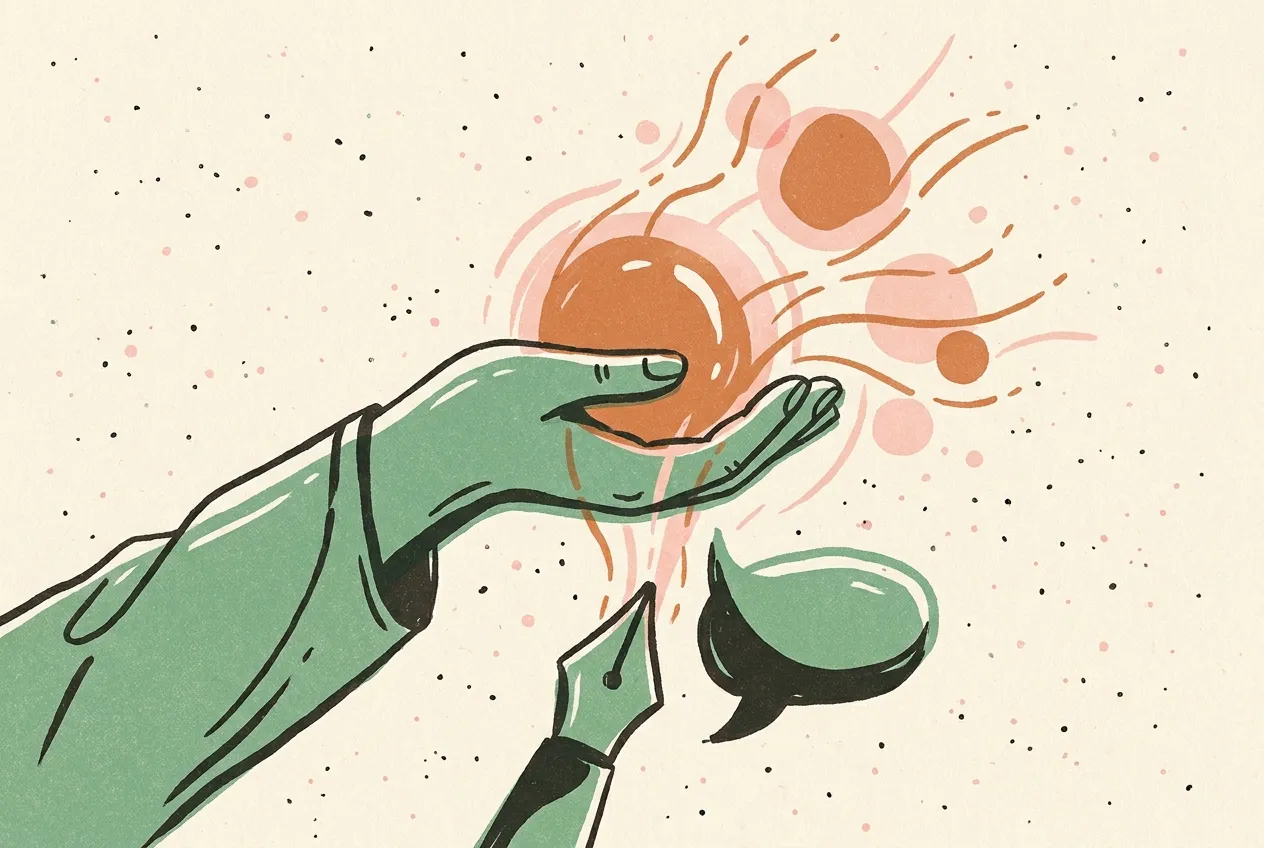
Here is what AI can honestly be for you: a bridge. From "I don't know where to start" to "I can do this." From scattered work in ten open tabs to one clearer way forward. That is a real gift, and it is enough. I am not promising you a different life. I am promising you a shorter distance between an idea and the moment you act on it.
But a bridge is only good if you are the one who crosses it. There is a difference between AI that helps you decide and AI that decides for you. Researchers who study this even put it on a scale, from tasks where a human is barely involved to tasks where human judgment is essential. My work sits at the human-essential end, on purpose. You stay the one who chooses. The tool carries some of the weight so your judgment has room to breathe.
The line I will not cross
I will not build you something that makes you dependent, generic, or disconnected from your own work. If a shortcut costs you your voice or your judgment, it is not a shortcut. It is a slow way to lose the thing people came to you for.
What changes when you stop trying to be an enterprise?
Almost everything gets lighter. When you stop copying how big companies work, the work gets clearer and stays yours. You do not need a stack of ten tools. You do not need a process built for fifty people. You need a small, honest way of working that fits one mind and one calendar and one set of values.
That is the shape of how I work. Sometimes it is advisory, where we sit together and I help you see the whole picture and pick your next honest step. Sometimes it is The Build, where I set up the actual system with you, in your voice, so it feels like something you would have made if you had the time and the map. Either way, you leave more capable, not more dependent. That is the only version I am interested in.
If any of this sounded like it was written for you, it probably was. You are the person I keep in mind. Come as you are, curious and a little unsure, and we will build a bridge you can actually cross.
FAQ
Who do you work with?
One person: the expert who is the business. A doctor, consultant, coach, educator, agency owner, or wellbeing practitioner whose expertise, decisions, and budget all live in the same head. I choose by values, not industry.
Why only one expert and not companies?
Because when one person is the buyer, the expertise, and the voice, the work can stay human and carry a real point of view. Advice built for large teams gets pasted onto individuals and feels cold. I build for the one mind that actually does the work.
What does purpose-led mean here?
It means your mission shows up in your choices, not just on your website. You have turned down work that paid more because it felt wrong, and you care about profit alongside your people and community. AI stays a bridge that keeps you capable, never a machine that makes the business less yours.
- Future of Work with AI Agents: Auditing Automation and Augmentation Potential across the U.S. WorkforcearXiv (Stanford)
- Automation vs. Augmentation: The Ethics of Human Oversight at WorkUniversity of Notre Dame, Ethics and the Common Good

Nina Brenes
AI partner for thoughtful experts · Founder of The Harmony Labs
Nina helps thoughtful experts turn what's in their head into AI-powered work that still sounds like them. She reads the research, tests the tools, and sits in the conferences so the people she works with get the short version: what is real, what to try this week, and what to ignore. Her focus is practical judgment, not hype.
Connect on LinkedIn