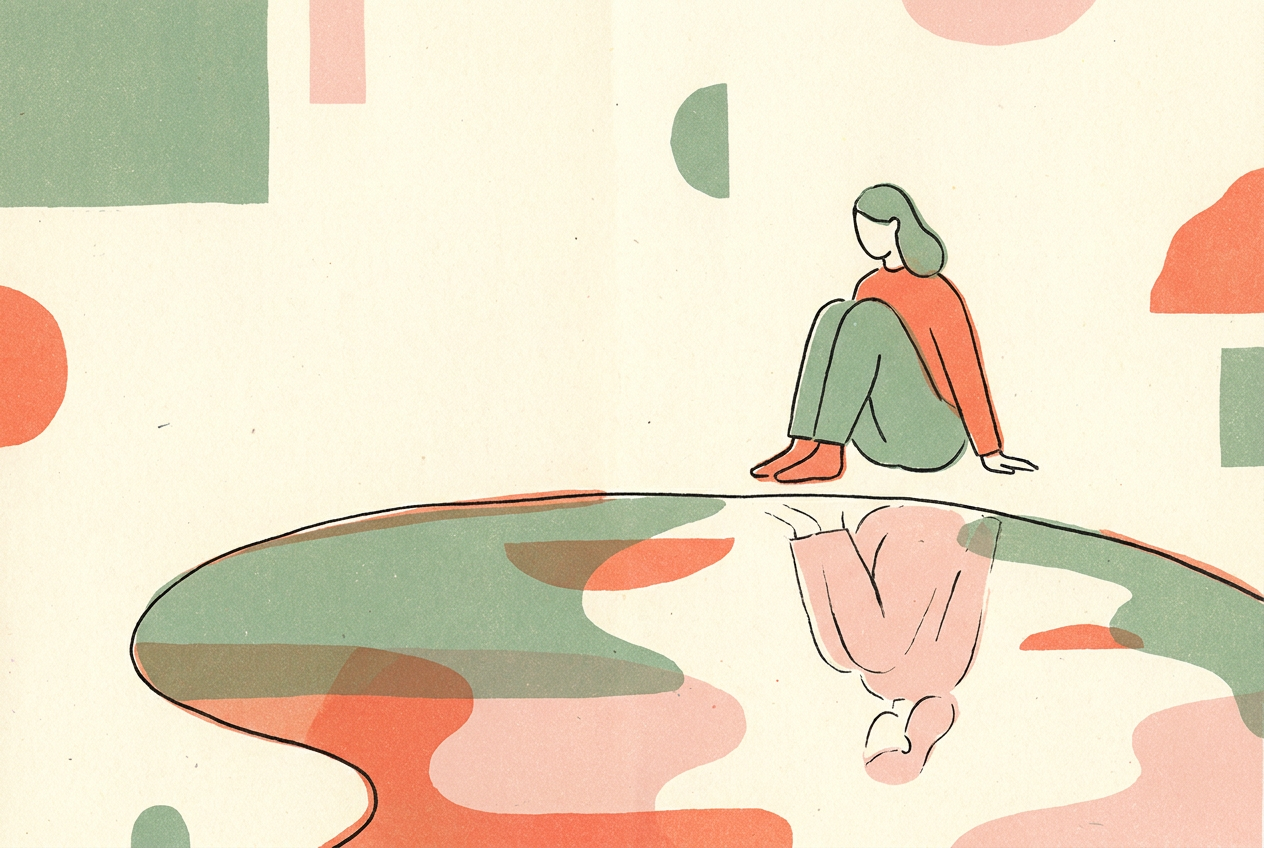
- The fear isn't really "AI will do my job." It's "if a machine can do part of this, was my part ever special?"
- What AI can do, the drafting, the summarizing, the formatting, was never the special part. It was the visible part.
- Your taste, judgment, presence, and the way you read what's unsaid, that's the part. AI can't source it because it comes from a life, not a dataset.
- In the U.S., 55% of workers get a sense of identity from their job (Gallup), and it's higher for the self-employed, so this fear lands hardest on founders.
- Handing the visible part to AI doesn't shrink you. It frees the part only you can do to actually show up.
Here's the quiet fear almost nobody says out loud: if AI can do part of what I do, was my part ever special? That's the real question under "AI will replace me," and it's worth answering honestly. So here it is. What AI can do was never the special part. It was the visible part. Your taste, your judgment, the way you read what someone isn't saying, that's the part, and a machine can't source it, because it comes from a life, not a dataset.
What is the fear actually about?
Not your calendar. Your worth. When people say they're scared AI will take their job, I'd gently push, because that's usually the outer layer. Underneath is something more tender: if a tool can spit out in twenty seconds the thing I was praised for, the thing I built an identity on, then what was that praise about? Was I ever the special one, or was I just the person who happened to be able to do a task that turned out to be automatable?
I'm not going to talk you out of the feeling, because it's real and it deserves better than a pep talk. I'll just sit in it with you for a second, because it's the actual question, and most advice skips right past it.
Was the part AI can do ever the special part?
No. And I know that's easy to say, so let me be specific. The special part was never the deliverable. It was the choosing. Why this idea and not the ten others. Why this word, this pause, this order. When to say the hard thing and when to hold it. How you can feel that a client is really asking a different question than the one they typed. That reading of the unsaid is taste and presence, and it's built out of everything you've lived, failed at, paid attention to. AI can imitate the shape of the output. It cannot stand where you're standing.
The part of you that AI can do was always the visible part. The part it can't do was always the reason people came to you.
One number for why this hits founders so hard: in the U.S., 55% of workers get a sense of identity from their job, and it runs higher among the self-employed (Gallup; Pew Research Center). If you built something, your work and your self are tangled together on purpose. So when a tool touches the work, it feels like it's touching you. That's not weakness. That's just what happens when you care.
So what do I do with that?
You let AI carry the visible part so the special part has room to show up. When you stop spending your best hours on the drafting and the formatting, you get those hours back for the choosing, the reading of the room, the deciding what to leave out. Handing off the automatable work doesn't shrink you. It's the opposite: it clears space for exactly the part that was always yours.
If you only take one thing
You were never special because of the tasks. You were special because of the judgment underneath them. AI is very good at the tasks. It has no idea how to be you. Let it take the first, and go be the second.
So, were you ever special? Yes, and not for the reason you were afraid of. The thing that made you you was never the part a machine could touch. That's still true. It was true before AI, and it's true now, and honestly, this might be the first time you get to spend most of your day on it.
FAQ
Is AI going to make me less special?
No. The part AI can do, the drafting and formatting, was the visible part, not the special part. Your taste, judgment, and presence come from a life, not a dataset, and AI can't source those.
Why does "AI will replace me" feel so personal?
Because for most of us, and especially founders, work and identity are tangled together. Gallup found 55% of U.S. workers get a sense of identity from their job, so when a tool touches the work it feels like it's touching you.
What can AI not replace?
Judgment, taste, presence, and the ability to read what someone isn't saying. It can imitate the shape of your output, but it can't stand where you're standing.
Should I feel guilty letting AI do part of my work?
No. Handing the visible, automatable part to AI frees your best hours for the part only you can do. It doesn't shrink you, it makes room for you.
Nina Brenes
AI partner for purpose-led, human-first founders
Certified AI Operator (The AI Exchange) and Anthropic Claude Partner. Nina spends her own time in AI conferences and daily practice so the founders she works with don't have to.
Certified AI Operator · Anthropic Claude Partner
Connect on LinkedIn