Key takeaways
- Burnout is driven more by a lack of control than by sheer volume. Researchers like Christina Maslach and the demand-control model of Robert Karasek point to autonomy, not hours, as the deciding factor.
- Boreout is burnout's twin: the exhaustion of being under-stimulated and under-used, doing monotonous work that never asks for the best of you.
- Cognitive Load Theory, from John Sweller, splits mental effort into extraneous load (wasted on how the work is presented) and germane load (spent on the real thinking). George Miller showed working memory holds only about 7 items at once.
- AI works best as an extraneous-load remover: it clears the busywork and clutter so your limited working memory is free for the work that actually compounds.
- A regulated nervous system is the precondition for focus. Work grounded in Stephen Porges and Bessel van der Kolk shows you cannot think clearly or create from a dysregulated, alarmed state.
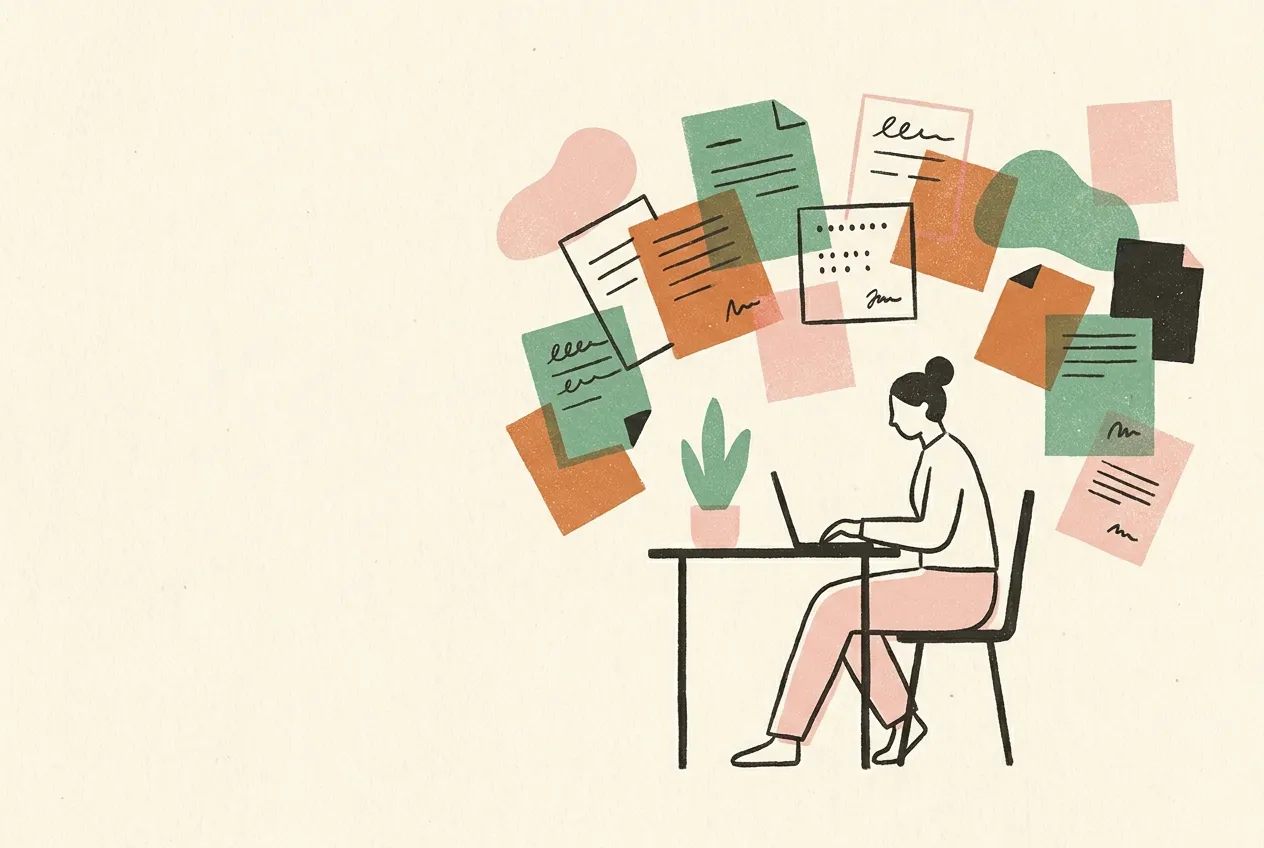
Burnout is not mainly about doing too much. That is the surprising part, and it is why cutting your task list rarely fixes it. Decades of research point at something else: burnout tracks lack of control far more than sheer volume. You can be busy and well; you can be underworked and fried. What actually breaks people is the sense that the work is happening to them, with no say over what, how, or when. If you have ever felt exhausted by a light week that was entirely out of your hands, you already know this in your body.
Is burnout caused by too much work?
Workload is one ingredient, but control is the deciding one. The psychologist Christina Maslach, whose work defined how we measure burnout, describes it across dimensions like exhaustion, cynicism, and a lost sense of efficacy, and points to mismatches between a person and their work, especially around control and fairness, not just hours. Robert Karasek's demand-control model makes the same point sharply: high demands are tolerable, even energizing, when paired with high control. The same demands become corrosive when you have no autonomy over how you meet them. The lever is not fewer tasks. It is more say over the tasks you have.
What is boreout, burnout's twin?
Boreout is the exhaustion that comes from being under-stimulated and under-used, and it looks a lot like burnout from the inside. Monotonous, meaningless work that never asks for your full capacity drains you just as surely as overload does, because a mind held below its level goes flat. This is the other reason volume is the wrong frame. The goal is not to do less. It is to stay in the zone where the challenge roughly matches your skill, engaged rather than either overwhelmed or bored, and to move the work that no longer stretches you off your plate.
What is cognitive load, and why does it matter?
Cognitive load is the total mental effort held in your working memory at once, and it matters because that memory is tiny. George Miller's classic finding is that working memory holds only about seven items, plus or minus two, before it overflows. John Sweller's Cognitive Load Theory splits that effort in two: extraneous load, wasted on how the work is presented, the clutter, the switching, the reformatting, and germane load, spent on the actual thinking that builds understanding. Overload rarely comes from the thinking being too hard. It comes from extraneous load stealing the space the real work needed.
The reframe, in one line
You are not doing too much. You are spending scarce working memory on extraneous load, low-control busywork that was never the work. Strip that, and the same day stops overflowing.
How does AI reduce cognitive load?
AI is at its best as an extraneous-load remover. Point it at the clutter that eats your seven slots of working memory: the reformatting, the inbox triage, the first-draft scaffolding, the copy-paste ops, the status updates. These are almost pure extraneous load, effort spent on the shape of the work rather than the substance. Hand them to AI and you free your limited working memory for germane load, the thinking that compounds. Just as important, clearing that low-control busywork gives you back a sense of control, the very thing whose absence drives burnout in the first place. You are not automating to cram in more. You are automating to protect the space real thinking needs.
Why is a regulated nervous system the precondition for focus?
Because you cannot think clearly, decide well, or create from an alarmed state, no matter how light the workload is. Stephen Porges's polyvagal theory describes how the nervous system constantly scans for safety or threat, and shifts you into fight-or-flight when it reads danger. Bessel van der Kolk's work on how the body holds stress makes the lived version plain: a dysregulated nervous system pulls resources away from the reflective, higher-order thinking that good work depends on. The overwhelm of the AI age, the endless pings and pace, is itself dysregulating. So the first move is not a better task list. It is a calmer state, protected hours, real recovery, and AI carrying the load that would otherwise keep your system on alert, so you can reach focus from a place of safety instead of alarm.
It's not that you're doing too much. You may be doing the wrong work, in a state your nervous system can't focus from.
So the honest fix for burnout is rarely just less. It is more control over what is yours, work that meets you at your level instead of below it, a nervous system calm enough to think from, and a machine carrying the extraneous load that was quietly overflowing your working memory. Don't automate to work more. Automate to work mindfully, and spend your human energy only where it is uniquely human.
FAQ
Is burnout caused by working too much?
Not mainly. Research from Christina Maslach and Robert Karasek's demand-control model points to lack of control, not sheer volume, as the deciding factor. High demands are tolerable when you have autonomy over how you meet them; they become corrosive when you don't. The lever is more say over your work, not simply fewer tasks.
What is the difference between burnout and boreout?
Burnout is exhaustion often tied to lost control; boreout is exhaustion from being under-stimulated and under-used, doing monotonous work below your capacity. They feel similar from the inside, and both argue against framing the problem as pure volume. The goal is to stay engaged, with challenge matched to skill, rather than overwhelmed or bored.
How does AI reduce cognitive load?
By removing extraneous load, the busywork and clutter that eat your limited working memory, which George Miller showed holds only about seven items. John Sweller's Cognitive Load Theory separates that wasted effort from the germane load of real thinking. Give AI the reformatting, triage, and repetitive ops, and you free your mind for the work that compounds.
- The Maslach Burnout Inventory and areas of worklifeChristina Maslach
- Job demands, job decision latitude, and mental strain (demand-control model)Robert Karasek, Administrative Science Quarterly
- The magical number seven, plus or minus twoGeorge A. Miller
- Cognitive Load TheoryJohn Sweller
- The Body Keeps the ScoreBessel van der Kolk

Nina Brenes
AI partner for thoughtful experts · Founder of The Harmony Labs
Nina helps thoughtful experts turn what's in their head into AI-powered work that still sounds like them. She reads the research, tests the tools, and sits in the conferences so the people she works with get the short version: what is real, what to try this week, and what to ignore. Her focus is practical judgment, not hype.
Connect on LinkedIn